How to Win at Tetris: Complete Strategy Guide for All Skill Levels
Tetris is one of the most recognized puzzle games ever created. Since its debut in 1984, millions of players have stacked, rotated, and cleared lines across countless platforms. Yet despite its simple premise -- fit falling blocks together to complete horizontal lines -- true mastery demands deliberate practice and strategic thinking. This guide breaks down the techniques that separate casual players from high scorers, whether you are picking up Tetris for the first time or pushing for a new personal best.
Understanding the Basics
The Seven Tetrominoes
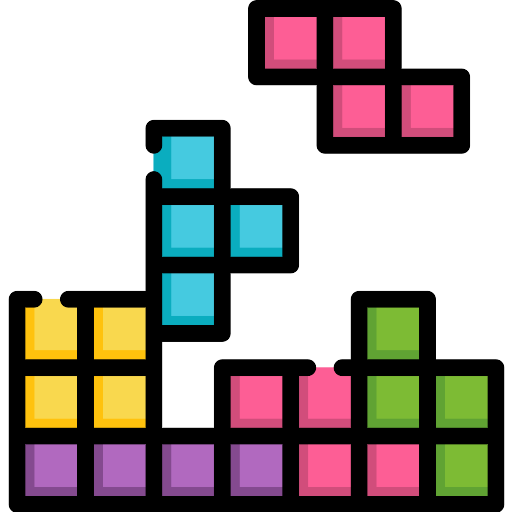
Every piece in Tetris is built from four connected squares. There are exactly seven shapes, each named after the letter it resembles:
- I-piece -- The long, straight bar. It is the only piece that can clear four lines at once (a "Tetris").
- O-piece -- The 2x2 square. It does not change when rotated, making placement straightforward.
- T-piece -- Shaped like the letter T. Extremely versatile and central to advanced techniques like T-spins.
- S-piece and Z-piece -- Two mirrored zigzag shapes. They fit into staggered gaps but can create holes if placed carelessly.
- L-piece and J-piece -- Two mirrored L-shapes. Useful for filling corners and building flat surfaces.
Learning how each piece rotates and where it fits best is the foundation of all Tetris strategy.
How Scoring Works
Points in Tetris reward efficiency. Clearing a single line earns the fewest points, while clearing four lines at once -- known as a "Tetris" -- awards the most. Consecutive multi-line clears build combo multipliers, and advanced moves like T-spins grant bonus points on top of the base line clear value. The takeaway is simple: whenever possible, aim for multi-line clears rather than removing one row at a time.
Building a Solid Stack
Good Tetris play starts with clean stacking. A messy board with scattered gaps makes recovery difficult and limits your scoring potential.
Keep the Surface Flat
The most important habit to develop is maintaining a relatively flat playing field. When your stack is even across the board, almost any piece can be placed without creating a hole. Resist the urge to build tall columns on one side unless you are deliberately setting up a Tetris clear.
Leave a Well for the I-piece
A standard strategy is to keep one column -- usually the far left or far right -- completely empty. This column, called the "well," is reserved for the I-piece. When the I-piece arrives, drop it into the well to clear four lines at once. This single habit dramatically increases your score over time.
Avoid Creating Holes
A "hole" is any empty cell buried beneath a placed block. Holes are the number one cause of failed games because they prevent line clears above them. Before locking a piece, always check whether it will cover an empty space. If you have a choice between a slightly uneven surface and creating a hole, choose the uneven surface every time.
T-Spin Techniques
T-spins are an intermediate-to-advanced technique that can transform your scoring. A T-spin occurs when you rotate the T-piece into a tight slot that it could not simply slide into. The game recognizes this special rotation and awards bonus points.
T-Spin Double
The most practical T-spin variation is the T-spin double, which clears two lines with bonus scoring. To set it up, build a small overhang that leaves a T-shaped gap. When the T-piece arrives, drop it near the gap and rotate it into place at the last moment. The key is recognizing the setup pattern on your board and resisting the temptation to fill the gap with another piece.
When to Use T-Spins
T-spins are powerful, but they require board preparation. If your stack is messy or you are under time pressure, prioritize clean stacking over forcing a T-spin setup. Use T-spins when the board naturally presents the right shape, or when you are comfortable enough to build the setup without introducing holes.
Speed Management
As you progress through levels, pieces fall faster. Managing speed is about knowing which drop method to use and when.
- Soft drop (pressing down) accelerates the piece gently, giving you time to adjust left or right during the descent. Use soft drop when you need precision placement.
- Hard drop (pressing up or spacebar in most versions) instantly locks the piece at its projected landing spot. Use hard drop when you are confident about placement and want to save time.
At higher speeds, previewing the next piece becomes critical. Most Tetris versions show at least one upcoming piece. Train yourself to glance at the preview while the current piece is still falling so you can plan two moves ahead.
Common Mistakes to Avoid
Even experienced players fall into bad habits. Watch out for these pitfalls:
-
Building too high in the center -- A tall center column limits your options for every piece. Always prioritize keeping the middle of the board low.
-
Ignoring the preview queue -- Playing reactively, one piece at a time, leads to poor placements. Use the next-piece preview to plan ahead.
-
Holding out for the I-piece -- Leaving your well open is good strategy, but letting your entire board pile up while waiting for an I-piece is dangerous. If the stack is getting tall, clear singles or doubles to buy time.
-
Panicking at high speed -- When pieces start falling fast, many players make rushed decisions that create holes. Stay calm, use hard drop for obvious placements, and focus on keeping the surface flat rather than chasing multi-line clears.
Practice Makes Perfect
Tetris is a game where consistent practice yields measurable improvement. If you want to sharpen your skills, play Tetris now right here in your browser. For a different kind of puzzle challenge that also trains spatial thinking, try our 2048 puzzle. And if you are in the mood for arcade action instead, our classic Block Breaker is another great option to test your reflexes.
Frequently Asked Questions
What is the best Tetris strategy for beginners?
Focus on two things: keep the surface flat and leave one column open for the I-piece. These two habits alone will dramatically improve your game. Do not worry about T-spins or combos until flat stacking feels natural.
How do I get better at Tetris fast?
Play in short, focused sessions rather than long marathons. After each game, think about what caused your board to become unmanageable. Was it a hole you created early? Did you build too high on one side? Identifying one mistake per session and working to correct it is the fastest path to improvement.
What is a T-spin and is it worth learning?
A T-spin is a special rotation of the T-piece into a tight gap that awards bonus points. It is absolutely worth learning once you are comfortable with basic stacking, because T-spin doubles can outscore regular Tetris clears in many game versions.
How do professional Tetris players play so fast?
Professional players rely on muscle memory and pattern recognition built through thousands of hours of practice. They do not consciously think about where each piece goes -- they recognize board patterns instantly and execute placements automatically. They also use hard drop almost exclusively to maximize speed.
Does the piece sequence in Tetris follow a pattern?
Modern Tetris games use a "bag" randomizer: all seven pieces appear exactly once in random order before any piece repeats. This means you will never go more than 12 pieces without seeing an I-piece. Understanding this system helps you plan ahead and manage your well strategy more effectively.