
The Golden Age of Arcade Games: A Brief History of Classic Gaming
Few cultural phenomena have shaped modern entertainment the way arcade games did. From a simple bouncing pixel on a black screen to the billion-dollar gaming industry we know today, the story of arcade games is one of innovation, obsession, and lasting influence. Whether you grew up feeding quarters into a cabinet or discovered these classics through browser games, the history of arcade gaming is worth understanding.
The Birth of Arcade Gaming (1970s)
The arcade era began in earnest in 1972 when Atari released Pong. Created by Allan Alcorn under the direction of Nolan Bushnell, Pong was little more than two paddles and a bouncing dot, yet it captivated the public. Bars, restaurants, and dedicated arcades installed Pong cabinets, and the machines earned so many quarters that they frequently jammed.
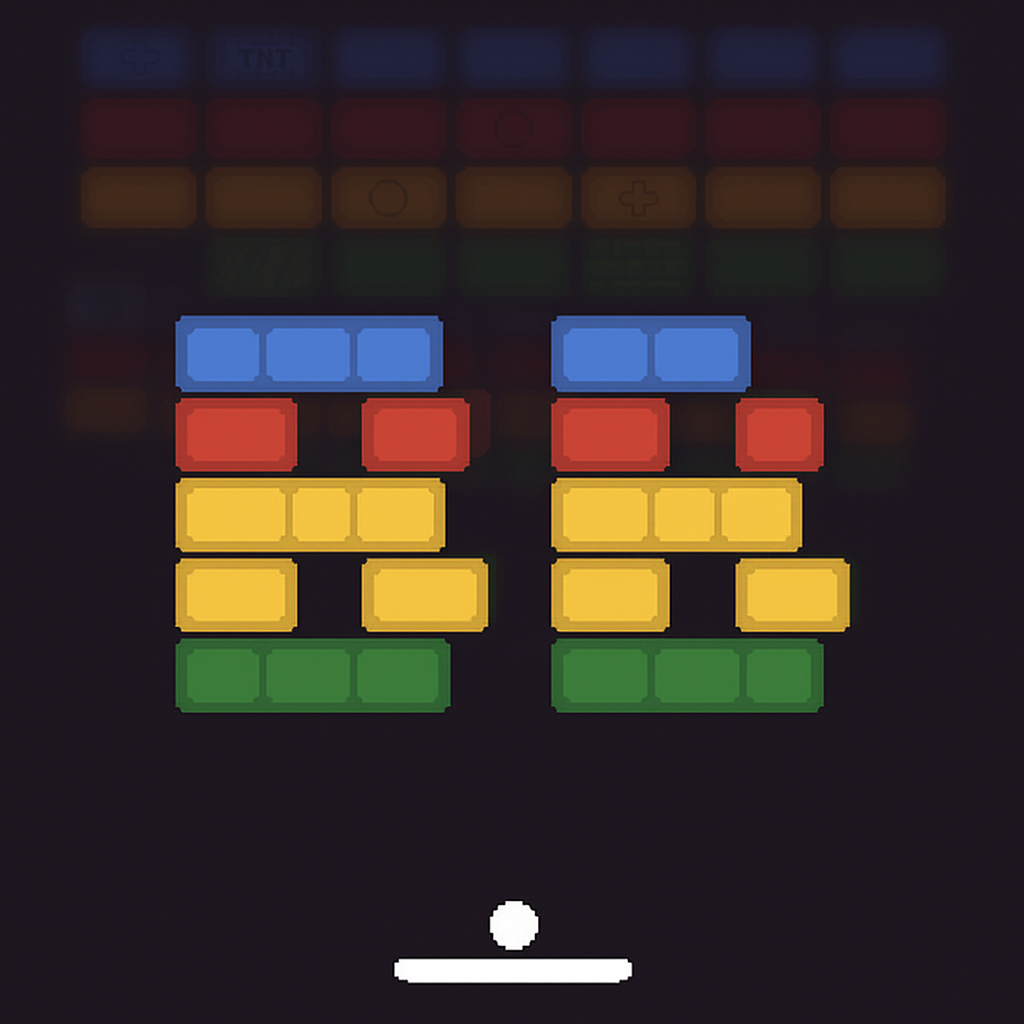
By 1976, Atari pushed the concept further with Breakout, a game designed in part by Steve Wozniak before he co-founded Apple. In Breakout, players used a paddle to bounce a ball into rows of colored bricks, clearing them one by one. The formula was deceptively simple but deeply satisfying. Breakout became the direct ancestor of an entire genre of brick-breaking games, including the modern Block Breaker that you can play right now in your browser.
These early titles proved something important: a game did not need complex graphics to be compelling. Tight mechanics and a clear objective were enough to keep players coming back.
The Golden Age (1980-1984)
The period between 1980 and 1984 is widely regarded as the Golden Age of Arcade Games. During these years, the arcade industry generated more revenue than both Hollywood box office receipts and the American music industry combined.
Pac-Man arrived in 1980 and became the first true gaming mascot. Designed by Toru Iwatani at Namco, Pac-Man introduced character-driven gameplay and appealed to audiences far beyond the typical young male demographic. The game sold over 400,000 arcade cabinets worldwide and spawned merchandise, a television series, and a pop song that reached the Billboard Top Ten. Today, you can relive the maze-chasing action by playing Pac-Man online for free.
Donkey Kong followed in 1981, introducing the world to a jumping carpenter named Mario. Designed by Shigeru Miyamoto, the game pioneered the platformer genre and launched what would become the most recognized character in video game history.
Other landmark titles from this era include Galaga (1981), Dig Dug (1982), and Dragon's Lair (1983). Each pushed the boundaries of what arcade games could achieve in terms of graphics, storytelling, and player engagement.
Then came Tetris in 1984. Created by Soviet engineer Alexey Pajitnov in Moscow, Tetris was a puzzle game built around falling geometric shapes called tetrominoes. Players rotated and arranged the pieces to complete horizontal lines. Its genius lay in the way it balanced mounting pressure with the satisfaction of a perfectly placed block. Tetris went on to become one of the best-selling games of all time, appearing on virtually every gaming platform ever created. You can experience its timeless gameplay by playing Tetris directly in your browser.

The Home Console Era and the Decline of Arcades
By the mid-1980s, the landscape began to shift. The Nintendo Entertainment System (NES) launched in North America in 1985, bringing arcade-quality experiences into living rooms. Sega followed with the Genesis in 1989, and the competition between the two companies drove rapid innovation in home gaming.
As console hardware grew more powerful, the gap between arcade and home experiences narrowed. Players no longer needed to travel to an arcade to enjoy high-quality games. The rise of the Super Nintendo, PlayStation, and eventually online multiplayer further eroded the arcade business model.
Arcades did not vanish overnight, but their cultural dominance faded through the 1990s and 2000s. Many beloved arcade halls closed their doors. Yet the games themselves never truly disappeared. Their design principles -- tight controls, instant feedback, escalating difficulty -- remained the foundation upon which all modern game design was built.
The Mobile and Browser Revival
The spirit of arcade gaming found new life in unexpected places. In 1998, Nokia pre-installed Snake on its mobile phones, introducing millions of people to simple, addictive gameplay during their daily commutes. Snake proved that the arcade formula worked perfectly on small screens, and it became one of the most-played games in history. You can play the classic Snake game right here on our site.
The smartphone era accelerated this trend. In 2013, Flappy Bird -- a game with mechanics as simple as any 1970s arcade title -- went viral, earning its solo developer an estimated $50,000 per day in advertising revenue before he pulled it from app stores. The game demonstrated that players still craved the one-more-try intensity that defined the original arcade experience. Try your hand at our Flappy Bird version to see why it captured millions of players.
In 2014, 2048 emerged as a browser-based puzzle phenomenon. Like Tetris before it, it combined mathematical logic with compulsive gameplay. The game spread across social media and spawned countless variants. Test your own strategy skills with 2048 on our platform.
Playing Classic Games Today
The beauty of classic arcade games is that they translate perfectly to modern browsers. No downloads, no installations, no powerful hardware required. The same games that once demanded a pocketful of quarters now run smoothly in a browser tab during your lunch break.
At Block Breaker, we have assembled a collection of these timeless classics, each faithfully recreated for modern web play. From the brick-smashing satisfaction of Block Breaker to the strategic depth of Tetris, every game in our library preserves the feel of the original while running on any device with a browser.
Why These Games Endure
Decades after their creation, classic arcade games continue to attract players. The reason is straightforward: simple mechanics create infinite replayability. When a game can be understood in seconds but takes hours to master, it never grows old. There is always a higher score to chase, a faster clear time to achieve, or a new strategy to test.
Modern game design has grown enormously in scope and complexity, but the core lessons of the arcade era remain relevant. The best games today still prioritize responsive controls, clear feedback, and the feeling that failure is the player's own doing -- never the game's fault. These principles were forged in the arcades of the 1970s and 1980s, and they still define what makes a game worth playing.
Frequently Asked Questions
What was the first arcade game ever made?
While Computer Space (1971) is considered the first commercially sold coin-operated video game, Pong (1972) was the first arcade game to achieve widespread commercial success and is generally credited with launching the arcade industry.
When was the Golden Age of arcade games?
The Golden Age of arcade games lasted roughly from 1978 to 1984. During this period, arcade games generated billions of dollars in revenue and produced iconic titles like Pac-Man, Donkey Kong, Galaga, and Tetris.
Why did arcades decline?
Arcades declined primarily because home consoles like the NES, Genesis, and PlayStation brought comparable gaming experiences into living rooms. As console and PC hardware improved, players no longer needed to visit arcades to play high-quality games.
Can I still play classic arcade games?
Yes. Many classic arcade games have been faithfully recreated as free browser games. You can play titles like Block Breaker, Pac-Man, Tetris, and Snake directly in your web browser without any downloads.
What made arcade games so addictive?
Arcade games relied on simple rules, tight controls, and escalating difficulty to create a compelling loop. The combination of easy-to-learn mechanics with hard-to-master depth kept players inserting quarters and coming back for more -- a design philosophy that remains effective in modern gaming.